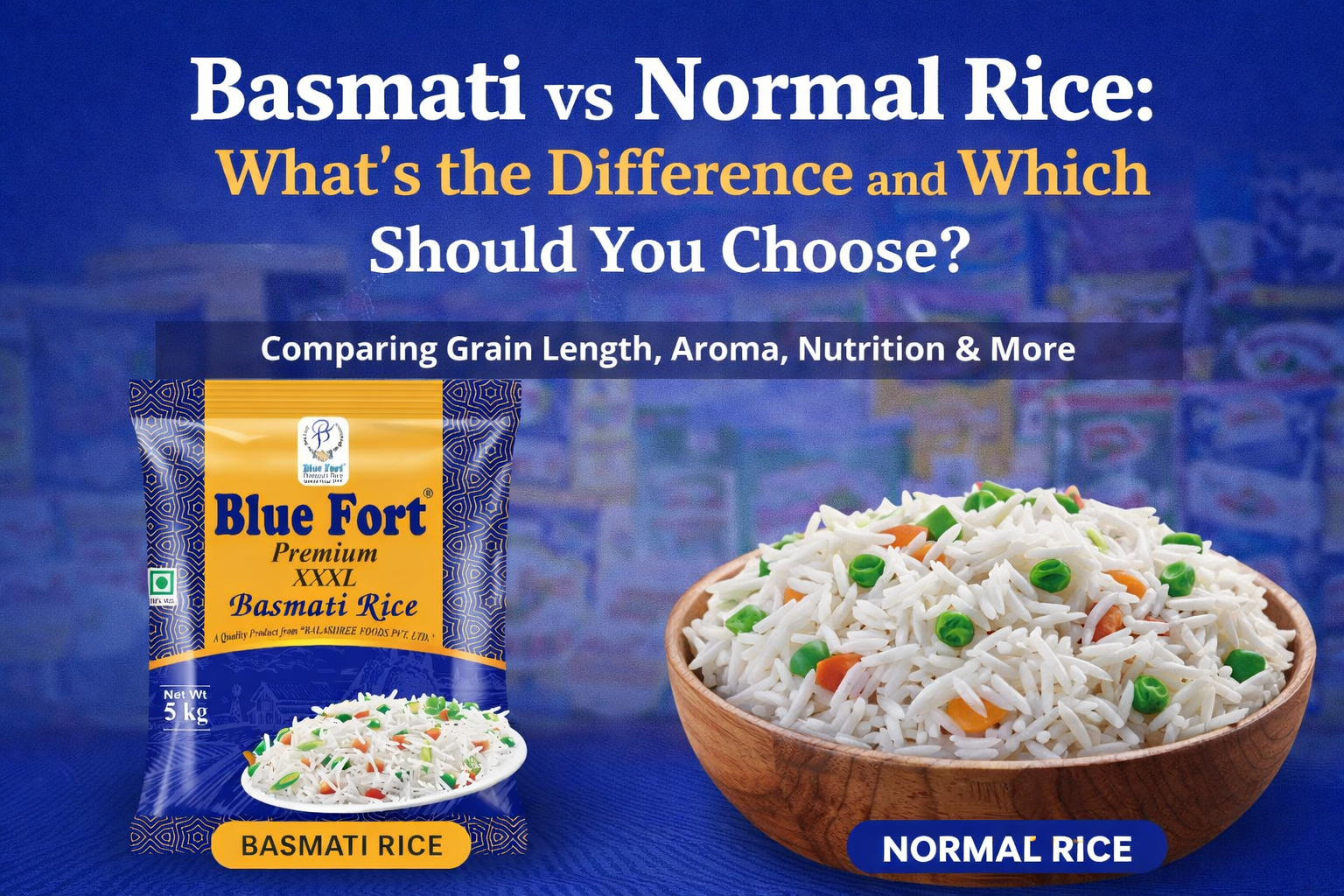
Choosing between basmati and normal rice can be confusing with so many varieties available in Indian markets. Whether you’re cooking daily meals or preparing special dishes, understanding the differences helps you make the right choice for your kitchen and budget.
In this comprehensive guide, we’ll break down everything you need to know about basmati versus normal rice, including grain characteristics, nutritional profiles, cooking properties, and when to use each type.
What is Basmati Rice?
Basmati rice is a premium long-grain variety primarily grown in the foothills of the Himalayas, particularly in India and Pakistan. The word “basmati” comes from the Sanskrit word meaning “fragrant,” which perfectly describes its distinctive aromatic quality.
Key Characteristics:
- Extra-long grains (7-8mm when raw, elongating to 10-12mm when cooked)
- Natural nutty aroma
- Light, fluffy texture when cooked
- Non-sticky grains that separate easily
- Available in white and brown varieties
- Premium pricing compared to regular rice
Basmati rice is protected under geographical indication (GI) in India, meaning only rice grown in specific regions can be labeled as authentic basmati.
What is Normal Rice?
Normal rice, often called regular rice or non-basmati rice, includes several popular varieties consumed across India. The most common types include:
- Sona Masoori – Medium-grain, lightweight rice popular in South India
- IR64 – Short to medium-grain, commonly used for daily consumption
- Swarna – Medium-grain variety widely grown across India
- Kolam – Small-grain rice from Maharashtra
- Ponni – Short-grain rice from Tamil Nadu
Normal rice varieties are typically more affordable and form the staple diet for millions of Indian households.
Basmati vs Normal Rice: Key Differences
1. Grain Length and Appearance
| Feature | Basmati Rice | Normal Rice |
|---|---|---|
| Raw grain length | 7-8mm (extra long) | 4-6mm (short to medium) |
| Cooked grain length | 10-12mm (doubles in length) | 6-8mm (limited elongation) |
| Grain shape | Long, slender, pointed ends | Short, round or oval |
| Appearance | Pearly white, uniform | Varies by variety |
| Elongation ratio | 2:1 or more | Less than 1.5:1 |
Basmati grains are visibly longer and more slender than normal rice, making them easy to identify even before cooking.
2. Aroma and Flavor
Basmati Rice:
- Distinctive nutty, popcorn-like aroma
- Caused by natural compound called 2-acetyl-1-pyrroline
- Aroma intensifies with aging (1-2 years)
- Delicate, slightly sweet flavor
- Enhances the overall dish without overpowering other ingredients
Normal Rice:
- Mild to neutral aroma
- No distinctive fragrance
- Some varieties have a slight earthy smell
- Subtle flavor that acts as a neutral base
- Takes on the flavor of accompanying dishes
The aromatic quality of basmati is one of its most prized characteristics, especially for special occasions and traditional dishes like biryani and pulao.
3. Texture and Cooking Properties
Basmati Rice:
- Cooks to a fluffy, light texture
- Grains remain separate and non-sticky
- Requires less water (ratio typically 1:1.5 to 1:2)
- Cooking time: 15-20 minutes
- Ideal for dishes where separate grains are desired
- Absorbs flavors well while maintaining structure
Normal Rice:
- Softer, sometimes sticky texture
- Grains tend to clump together slightly
- Requires more water (ratio typically 1:2 to 1:2.5)
- Cooking time: 20-25 minutes
- Better for dishes requiring a cohesive texture
- Absorbs water readily
4. Nutritional Comparison
| Nutrient (per 100g cooked) | Basmati Rice | Normal Rice (avg) |
|---|---|---|
| Calories | 120-130 kcal | 130-140 kcal |
| Carbohydrates | 25-28g | 28-30g |
| Protein | 3-3.5g | 2.5-3g |
| Fat | 0.5g | 0.3g |
| Fiber | 0.6-0.8g | 0.4-0.6g |
| Glycemic Index | 50-58 (medium) | 64-72 (high) |
| Amylose content | High (25-30%) | Low to medium (15-25%) |
5. Price Comparison
Basmati Rice Pricing (5kg pack):
- Standard basmati: ₹300-500
- Aged basmati (1 year): ₹500-700
- Premium aged basmati (2 years): ₹700-1,000
- Export quality basmati: ₹800-1,200
Normal Rice Pricing (5kg pack):
- Sona Masoori: ₹200-300
- IR64: ₹150-250
- Swarna: ₹180-280
- Local varieties: ₹120-200
When to Use Basmati Rice
Basmati rice is best suited for:
Special Occasion Dishes
- Biryani
- Pulao
- Zarda
- Jeera Rice
Everyday Premium Meals
- When hosting guests
- Weekend family dinners
- Meal prep for special diets (diabetic-friendly due to lower GI)
- Fried rice and Indo-Chinese preparations
Health-Conscious Cooking
- Managing blood sugar levels
- Weight management programs
- Low-glycemic diet plans
- Meals requiring portion control
When to Use Normal Rice
Normal rice varieties are ideal for:
Daily Meals
- Dal-chawal
- Curd rice
- Sambar rice
- Rasam rice
- Pongal
Regional Preparations
- South Indian meals
- Bengali cuisine
- Eastern India
- Western India
Budget-Conscious Cooking
- Large family meals
- Community cooking or events
- Daily consumption where aroma is not priority
- When preparing 3+ meals per day
Dishes Requiring Soft Texture
- Rice porridge (kanji)
- Baby food preparations
- Khichdi
- Rice flour and batters
Basmati vs Normal Rice: Quick Comparison Chart
| Factor | Basmati Rice | Normal Rice | Winner |
|---|---|---|---|
| Aroma | Distinctive | Neutral | Basmati |
| Grain length | Extra long | Short-medium | Basmati |
| Texture | Fluffy | Soft | Depends |
| Glycemic Index | Lower | Higher | Basmati |
| Price | High | Affordable | Normal |
| Cooking time | Faster | Slower | Basmati |
| Best for biryani | Excellent | Not ideal | Basmati |
| Best for daily use | Expensive | Practical | Normal |
Health Benefits: Which is Healthier?
Basmati Rice Health Benefits
- Better blood sugar control
- Improved satiety
- Easier digestion
- Contains essential nutrients
Normal Rice Health Benefits
- Quick energy source
- Affordable nutrition
- Highly versatile
- Culturally integral
The Bottom Line: Which Should You Choose?
Choose Basmati Rice if you:
- Want premium quality
- Cook biryani/pulao
- Need lower GI
Choose Normal Rice if you:
- Need daily staple
- Have budget constraints
- Prefer soft texture
Smart Strategy: Use both depending on need.